

⚡ Product Introduction & Parameters The ABB 3BHE024747R0101 (also referenced as the GDC801 board or carrying code 3BHE024748P104) is a specialized printed circuit board primarily utilized as a Crowbar Drive / Control Board within ABB medium-voltage AC drives (such as the ACS 2000 and ACS 5000 series). It acts as a core protection and control component designed to manage overvoltage transients and safeguard high-power converter systems. For alternative automation hardware choices, check out dcsplcsystem. Below are key technical parameters for the device:
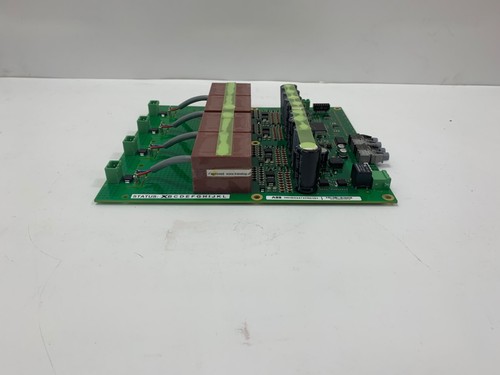
- Product Name: ABB GDC801 Crowbar Drive Control Board
- Part Numbers: 3BHE024747R0101 / 3BHE024748P104
- Application Domain: ABB ACS 2000, ACS 5000, and related medium-voltage frequency converter systems
- Core Function: Crowbar system control, high-voltage divider monitoring, short-circuit detection, and switching management for protection thyristors
- Certificate of Conformance (COC): Available upon formal request for quality tracking and compliance verification
- Country of Origin (COO): Sweden / Switzerland / USA manufacturing variants
- Physical Dimensions: Approx. 373 mm H x 73.5 mm W x 142 mm D (varying by specific mounting assembly specs)
- Weight: Approx. 1.0 kg to 1.43 kg
- Operating Temperature Range: Standard industrial medium-voltage drive environment ratings (–20°C to +70°C)
- Environmental Protection: Conformal-coated printed circuit board designed to withstand harsh industrial conditions
🔌 Installation & Integration Steps
- Slot and Rack Preparation: Ensure the drive system is completely de-energized and locked out before accessing the medium-voltage control compartments.
- Mechanical Insertion: Align the GDC801 board carefully with the designated backplane slots or guide rails inside the drive’s control rack, pushing firmly to seat the edge connectors.
- Securing and Cabling: Fasten any retaining screws and verify that optical or monitoring leads connected to the board are securely locked in place.
⚙️ Power-Up Debugging Process
- Pre-Energization Check: Inspect all physical connections, board seating, and internal rack wiring to ensure no debris or short circuits exist.
- System Startup: Apply control power to the drive architecture and monitor system-level diagnostic indicators on the main controller interface.
- Fault and Status Monitoring: Verify through the drive’s software environment that the GDC801 board initializes successfully without triggering crowbar hardware faults or communication errors.
📋 Initial Run Checklist
- Firmware & Parameter Verification: Confirm that the drive control software correctly recognizes the GDC801 module and that protection parameters align with operational thresholds.
- Thermal and Environmental Check: Ensure internal cabinet cooling fans are operating normally to maintain safe operating limits around high-power components.
- Signal Responsiveness: Check that voltage divider and synchronization channels are accurately reporting values back to the central processor.
- Mechanical Stability: Confirm that module locks and board retainers prevent shifting under mechanical or electrical stress.
🛠️ Routine Maintenance & Care
- Periodic Inspection: Inspect the board regularly during scheduled maintenance outages for signs of dust accumulation, thermal stress, or environmental corrosion.
- Cleaning: Use dry, clean, static-free air or approved electronic cleaners to remove particulate buildup from conformal-coated surfaces.
- Connection Security: Check all plug-in terminal connections and securing hardware periodically to counteract industrial vibration loosening.
- Diagnostic Logging: Review drive event logs routinely to track historical protection triggers or warning flags associated with the power electronics protection layer.
❓ Frequently Asked Questions (Q&A)
- What is the primary role of the GDC801 board? It serves as a specialized crowbar control board designed to protect medium-voltage drives from damaging overvoltage conditions by rapidly triggering protective circuitry.
- Which drive lines utilize this module? It is predominantly deployed in ABB medium-voltage variable frequency drives such as the ACS 2000 and ACS 5000 series.
- Does the board require special handling? Yes, because it is an electronic printed circuit board handling sensitive signal processing and protection functions, standard electrostatic discharge (ESD) precautions must be observed during handling and replacement.
📦 Recommended Alternative Series and Models from ABB
- ABB ACS 2000 Medium Voltage Drive Spares
- ABB ACS 5000 Drive Control Components
- ABB AC 800M Controller Hardware Series
- ABB CI858K01 DriveBus Interface Module
- ABB PM866K01 Processor Units
- ABB S800 I/O Communication Modules
- ABB Excitation Control Boards
- ABB RLM01 Redundancy Link Modules
- ABB Advant Fieldbus 200 (AF 100) Interfaces
- ABB Tu810V1 Module Termination Units
 E-mail:dcsplcsales@gmail.com
 Wechat:+86 13365909307
 Phone:+86 13365909307